Your Ultimate Guide to the Karambit Knife
Everything you need to know about the Karambit knife of Indonesian Pencak Silat
By Steve Hanafi and Hussein Udom
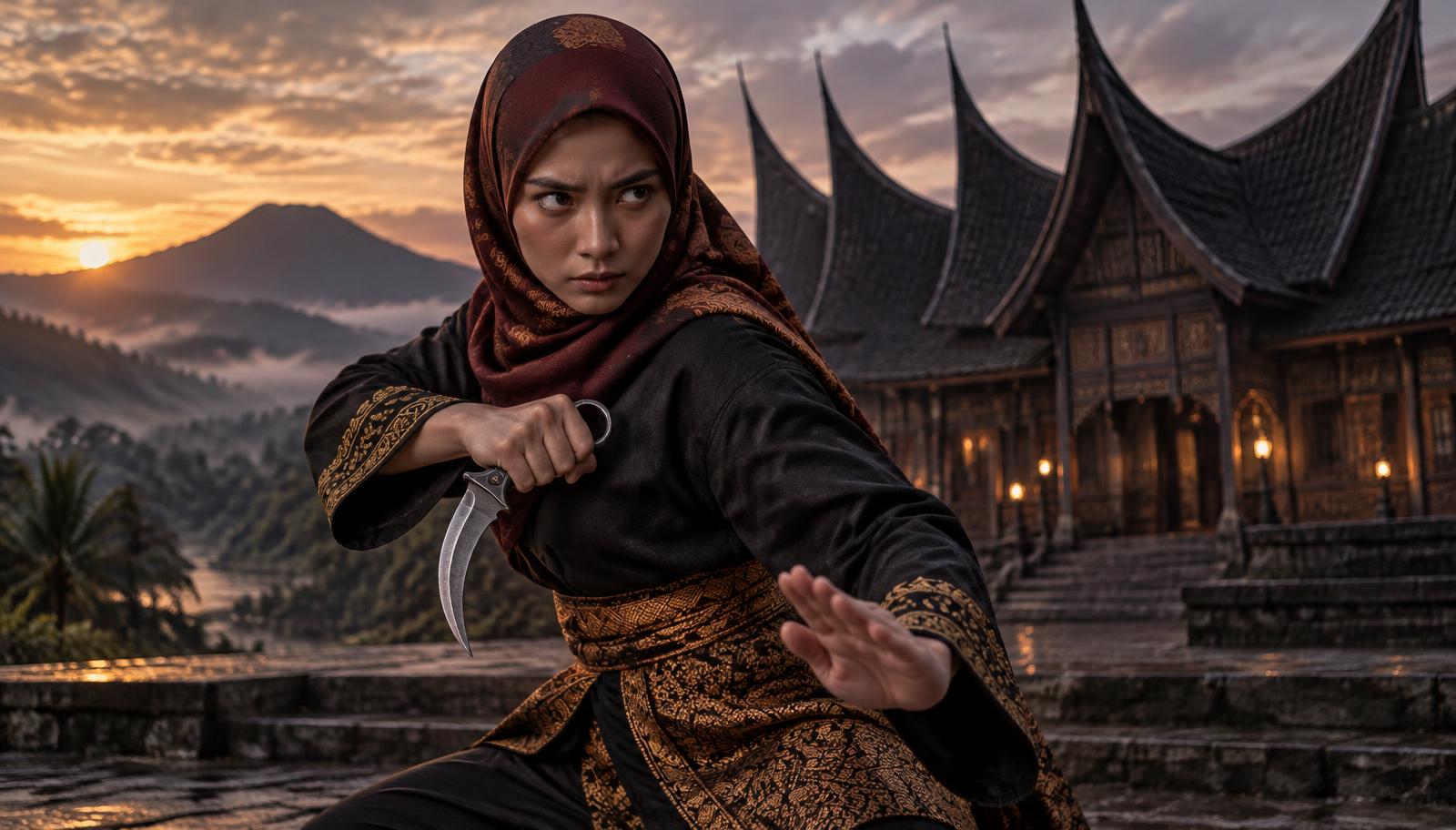
If you’re like many people, you must’ve been wondering, what’s the hype with this claw-shaped blade in Silat Martial Arts? The awesome karambit knife! Why is it so popular? Why are you seeing it almost everywhere now? Why is it in the movies and also in video games? What’s so special about this blade? In this article we’ll explore why the karambit knife is so famous and why, in our opinion, it’s the best knife for close combat.
Origins of the Karambit
The Karambit originated in western Sumatra, Indonesia, where it was used by Orang Minang (Minangkabau people). Orang Minang are famous for their harimau (tiger) systems of Pencak Silat, known locally in Bahasa Minang (Minang dialect) as “Silek” and widely practiced by the people for generations. Orang Minang can also be found in the brother country of Malaysia, specifically in the state of Negeri Sembilan where Minang food, culture, architecture, and the traditional karambit knife are always present.
The exact shape, size, and material have changed over time as it was adopted by warriors and the royal guards, but contrary to popular belief, the karambit knife was never a farming tool or tool of labor. It was a tool of the nobility of Minangkabau and rarely taught except to specific people who the masters trusted with their ilmu rahasia (secret knowledge). What was used as a farming tool was the Sabit (sickle), which is a common farming tool and used for cutting down kelapa sawit (palm oil) fruit and other farm-oriented tasks.
The karambit knife supposedly originated with noblewomen who needed a small, deadly weapon for defense of honor and virtue. It was effortless to use and required minimal power to cause severe damage to the intended target, so the karambit knife was an obvious choice for a smaller frame. In the past, many women were trained in Pencak Silat, and they used to hide their karambits by tying them into their hair and drawing them whenever the need to defend their honor arose. Even across the waters in Malaysia, folklore stories abound with tales of incredible warrior women like Walinong Sari and Che Siti Wan Kembang, akin to Valkyries, besting men in duels and battles. Legend also has it that many of the early karambit techniques were initially developed by women warriors before later being improvised by the soldiers and royal guards as they adopted the weapon for themselves.
The tiger has always been associated with Orang Minang because of the mountains that were home to the Sumatran tigers. But few people know that the karambit knife, when used in pairs, one in each hand, also forms the shape of the tanduk kerbau (buffalo horns) which is the lambang (symbol) of the people of Minangkabau and part of their coat of arms. Further entrenching the karambit into the culture of Minangkabau and its Silek systems.
“A Silat warrior that hasn’t mastered the karambit is like a tiger that doesn’t have claws.” — Minangkabau proverb
Unique Features of the Karambit
The earlier designs of the Karambit knife were inspired by tiger claws and fangs (kuku dan taring), and they were short compared to modern designs which are larger and longer in size. Living up to its name as a last-ditch weapon, it makes sense that they were made short, small, easily carried, and most importantly, concealed. The edge of the blade was often smeared with different types of deadly poison so that even the smallest cut would cause the poison to seep into the victim’s body. This is quite similar to how the Keris was made by dousing it in poison. Because of its deadliness and concealability, the Karambit was often considered a “cheating weapon” by many old Pendekars. And many died at the hands of Silek masters who wielded small karambits at blinding speed, making them almost invisible except to the unlucky recipient of their bite.
The Karambit knife comes in two types: Jantan (male) and Betina (female). And they can be distinguished by their blade shapes. Jantan, having Bentuk Kuku Harimau (tiger claw curve) and the Betina having Bentuk Taring Harimau (tiger fang curve) which is straighter and can be used to easily slit a throat. Also, contrary to popular portrayals in the media, the Adab (manner) of using the karambit knife in relation to self-defense, isn’t immediately to kill people unless one is an assassin. And most masters were not. The term karambit comes from two words: karam + ambit, which literally means to grab something. And that is precisely what the karambit does, it grabs you. But at that point you still have a chance for life if you submit. If you persist in violence, the blade changes and becomes, “kurambit’, which means a clean, slicing motion to finish a dangerous enemy. Sometimes the male and female karambit are further distinguished by their different “teeth”, the ridges on their spine. Five teeth (female) representing the 5 pillars of Islam and 7 teeth (male) representing the seven parts of the body that touch the ground during ritual prayer. Minang legends said that masters who understood these secrets were able to overcome those who had Ilmu Kebal, the power of invulnerability to weapons through magical machinations because God is more powerful than magic. More practically though, the teeth could be used for disarming as well as skin ripping techniques.
The karambit knife has a ring-like feature at the handle used to give better retention, aiding the draw process and strengthening the grip. The ring feature also allows the user to open and close their hands during combat without fear of dropping their weapon, making the karambit an efficient weapon for extreme close-quarter combat. The ring also allows the user to flick the karambit knife outward for contour cutting. Traditionally the blade of the karambit was short, most of the times less than 3 inches. This was an important factor in retention as well since longer weapons are much easier to disarm than shorter ones, and to ensure that it doesn’t “bite” its owner during combat. But as time progressed, newer designs featured blades that were longer than 3 inches, usually 3.5 to 6 inches in length.
“You won’t see it until you feel it.”