The Ultimate Guide to the Golok: Iconic Short Sword of Pencak Silat
Everything you need to know about the short sword of the Betawi and the Silat traditions of the Malay Archipelago
By Hussein Udom
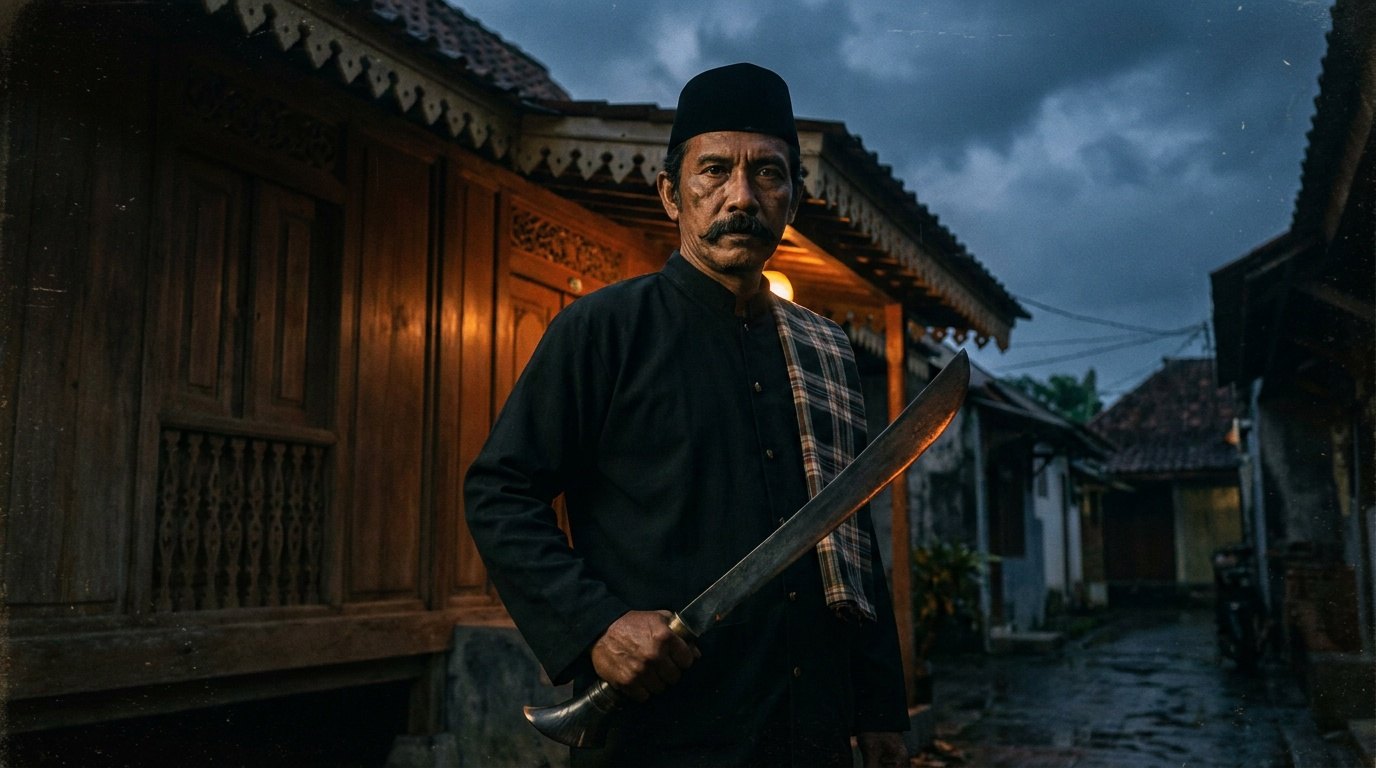
The Keris is the blade of kings. The Karambit is the claw of the tiger. The Golok is the blade of the people, and the people are the ones who fight the longest wars.
It cleared the jungle in the morning and defended the house at night. It hung in every Betawi home. It went into the alleys of Batavia against the Dutch, and it went into the streets of Surabaya against tanks and machine guns. It is not a weapon that asks for ceremony. It asks for a strong arm, a clear mind and a reason worth fighting for.
This guide is the base text. Everything you need to know about the Golok, its history, its families, its anatomy, its forging, its use and its code, is here. Read it once to learn it. Return to it whenever you need the truth about this blade.
Historical Background
The Golok is more than just a weapon; it is a cultural symbol deeply embedded in the history and traditions of the Betawi people of Indonesia specifically, and the Silat traditions all over the Malay Archipelago in general. This short machete, with its distinctive design and multifaceted uses, represents the ingenuity and resourcefulness of Pencak Silat practitioners over the centuries. From its origins to its modern-day significance, the Golok stands as a testament to the Betawi people's heritage and a symbol of resistance for Silat practitioners everywhere.
The Betawi people are the indigenous inhabitants of Jakarta, the capital city of Indonesia. Their culture is a rich tapestry woven from various influences, including Malay, Javanese, Chinese, Arab, and European influences. This diverse heritage is reflected in their religious and cultural practices, their food, their clothing, their music, and their weaponry. The Golok was early on adopted as one of the iconic symbols of their people and the most important weapon taught in their styles of Pencak Silat. The Golok, as a traditional blade, has a long history that predates the formal establishment of the Betawi people as a distinct ethnic group. While the exact origins of the Golok are difficult to pinpoint, Malay and Javanese historical records and artifacts suggest that similar machetes have been used across the Malay Archipelago for centuries.
The Pre-Betawi Era
The term "Golok" itself is derived from an old Malay word "golog," which means a type of knife or short sword. References to machete-like tools can be traced back to very early inscriptions and records from various parts of the Malay Archipelago, including Sumatra, Java, and Borneo.
1. Malay Annals (Sejarah Melayu): One of the earliest recorded literary mentions of a blade resembling the Golok can be found in the Sejarah Melayu, a classical Malay text dating back to the 15th century. The annals describe various weapons used by Malay warriors, including short machetes similar to the Golok. These texts highlight the importance of such tools in both daily life and warfare.
2. Javanese Historical Records: In Java, historical texts such as the "Pararaton" (The Book of Kings) and "Negarakertagama," which date from the 14th century, also reference the use of short swords and machetes. These weapons were used by soldiers and common people alike for agricultural tasks and warfare. The design and usage of these blades bear a strong resemblance to the Golok.
3. Archeological Findings: Archeological findings from various sites in Indonesia have uncovered blades that resemble the Golok, dating back to Sriwijaya, a powerful Malay Buddhist Empire based in Sumatra that was the precursor to the Melaka Sultanate founded later on in Malaysia that became the height of Malay Islamic Empire of antiquity. And Majapahit, a powerful Javanese Hindu Empire, both existing between the 7th and 15th centuries before their conversions to Islam and transformation into powerful local Sultanates. These empires had extensive trade networks, cultural exchanges, and wars, which likely contributed to the dissemination of blade-making techniques across the region.
Understand what this means. The Golok was not invented by a single smith in a single village. It was refined by a thousand years of farmers, soldiers and fighters who needed one blade that could feed the family by day and defend it by night. Every generation cut away what did not work. What remained is the blade you hold today.
The Colonial Period
The arrival of the Dutch in the early 17th century marked a significant turning point in the history of the Betawi people and the Golok. Under Dutch colonial rule, Jakarta, then known as Batavia, became a bustling center of trade and commerce. The colonial administration imposed various restrictions on the local population, including regulations on the carrying of weapons in order to minimize resistance against their rule. Despite these restrictions, the Golok continued to be an important tool and weapon for the Betawi people. Its relatively small size made it easy to conceal, allowing locals to carry it discreetly within their clothing. The Golok was often used in guerrilla tactics against Dutch forces, and it became a symbol of resistance and resilience throughout the region. Many incidents of "Perang Sabil" or martyrdom attacks by Betawi Mujahedeen (Islamic warriors) included the Golok as it was easily concealed and deployed against the invaders at opportune times.
The early 20th century saw the rise of nationalist movements across Indonesia, including in Jakarta, and the Golok played a symbolic and practical role in these movements. Nationalist leaders and freedom fighters, known as "pahlawan," often carried Goloks as symbols of their commitment to the struggle for independence. The weapon’s association with resistance and self-reliance made it a powerful emblem in the fight against colonialism. During the Indonesian National Revolution (1945-1949), which followed the end of World War II and the Japanese occupation, the Golok was used a lot by militias and revolutionary groups. Its effectiveness in close-quarter combat and its symbolic value made it a preferred weapon among many fighters, and especially amongst those who had mastered the Golok as part of their practice of Pencak Silat.
After Indonesia gained independence in 1949, the Golok continued to hold cultural significance for the Betawi people. The weapon was no longer needed for resistance, but it remained a valued tool and a symbol of their community. In the rapidly modernizing society of post-independence Indonesia, the Golok served as a link to the past and a reminder of the people's enduring spirit.
When the Dutch East India Company took Jayakarta in 1619 and built Batavia on its ashes, they brought cannon, muskets and a law that said the native must walk unarmed. The Betawi answered the law with the Golok. A blade that is also a farming tool cannot be banned without starving the colony that bans it. That was the genius of the people: they hid a weapon inside a necessity, and they kept it there for three hundred years.
- 7th–15th c.: Sriwijaya and Majapahit: Golok-like blades spread across the Archipelago through trade and war.
- 14th c.: The Pararaton and Negarakertagama record short swords and machetes in Javanese hands.
- 15th c.: The Sejarah Melayu describes Malay warriors armed with short machetes.
- 1619: The Dutch take Jayakarta and build Batavia; weapon laws drive the Golok under the sarong.
- 1945: Battle of Surabaya: Golok-armed Silat fighters on the front line of the Revolution.
- 1949: Independence. The Golok remains in every Betawi home.